import torch
import torch.nn as nn
import torch.optim as optim
from sklearn.datasets import load_iris
from sklearn.model_selection import train_test_split
from sklearn.preprocessing import StandardScaler
from sklearn.metrics import confusion_matrix, accuracy_score
from sklearn.decomposition import PCA
import numpy as np
import matplotlib.pyplot as plt
import seaborn as sns
"""
torch:PyTorch深度学习框架,用于构建和训练神经网络。
torch.nn:包含了构建神经网络所需的各种层和损失函数。
torch.optim:提供了各种优化算法,如Adam、SGD等。
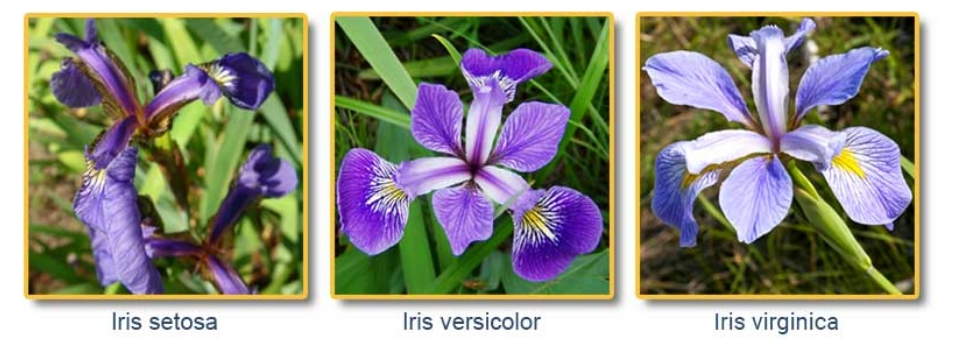
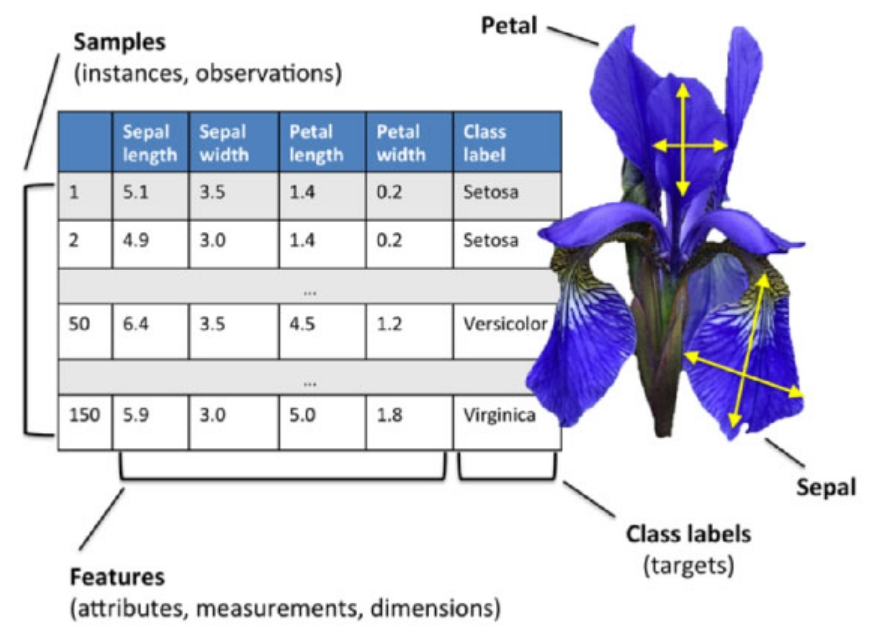
sklearn.datasets.load_iris:用于加载鸢尾花数据集。
sklearn.model_selection.train_test_split:用于将数据集划分为训练集和测试集。
sklearn.preprocessing.StandardScaler:用于对数据进行标准化处理。
sklearn.metrics.confusion_matrix和sklearn.metrics.accuracy_score:用于评估模型的性能。
sklearn.decomposition.PCA:用于对数据进行主成分分析(PCA)降维。
numpy:用于数值计算。
matplotlib.pyplot:用于绘制图表。
seaborn:基于matplotlib的可视化库,提供更美观的图表样式。
"""
iris = load_iris()
X = iris.data
y = iris.target
X_train, X_test, y_train, y_test = train_test_split(
X, y, test_size=0.2, random_state=42, stratify=y
)
scaler = StandardScaler()
X_train_scaled = scaler.fit_transform(X_train)
X_test_scaled = scaler.transform(X_test)
X_train_tensor = torch.FloatTensor(X_train_scaled)
y_train_tensor = torch.LongTensor(y_train)
X_test_tensor = torch.FloatTensor(X_test_scaled)
y_test_tensor = torch.LongTensor(y_test)
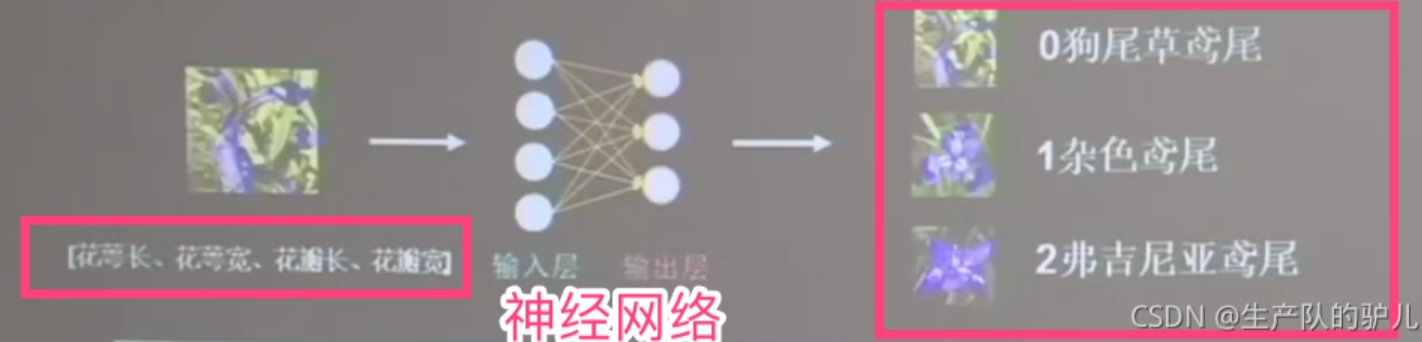
class IrisClassifier(nn.Module):
"""
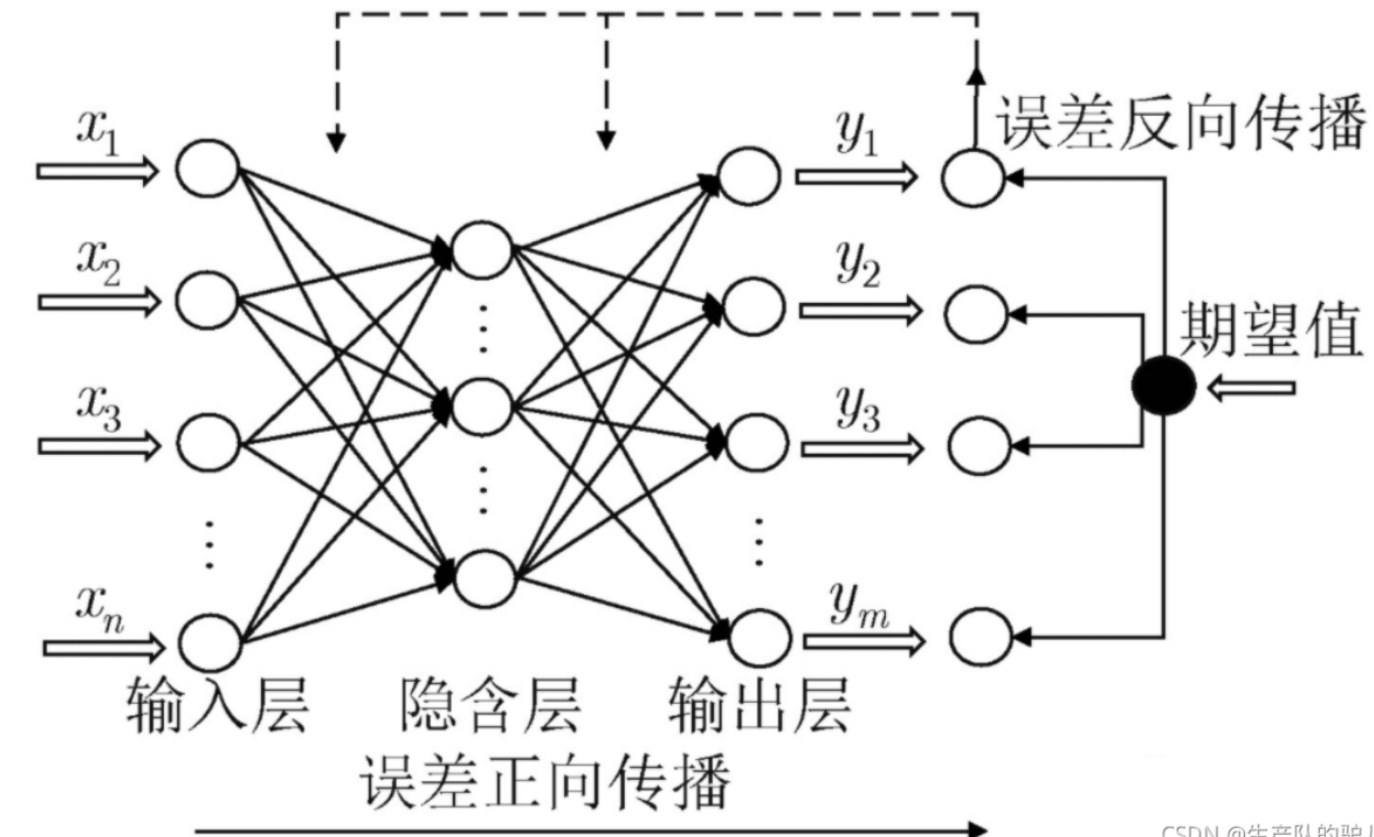
定义一个名为 IrisClassifier 的神经网络模型,继承自 nn.Module。
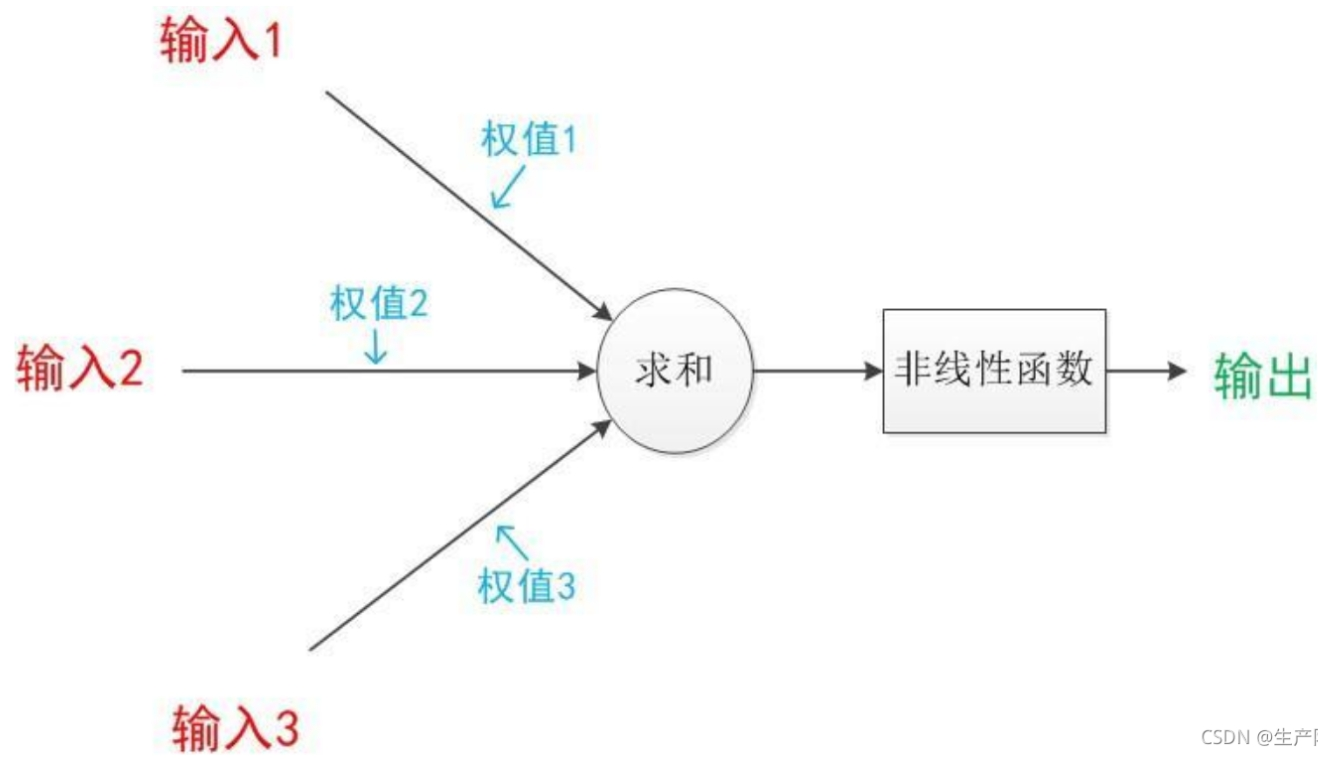
该模型包含三个全连接层和一个 ReLU 激活函数。forward 方法定义了模型的前向传播过程,
输入数据依次通过三个全连接层和 ReLU 激活函数,最终输出预测结果。
"""
def __init__(self):
super().__init__()
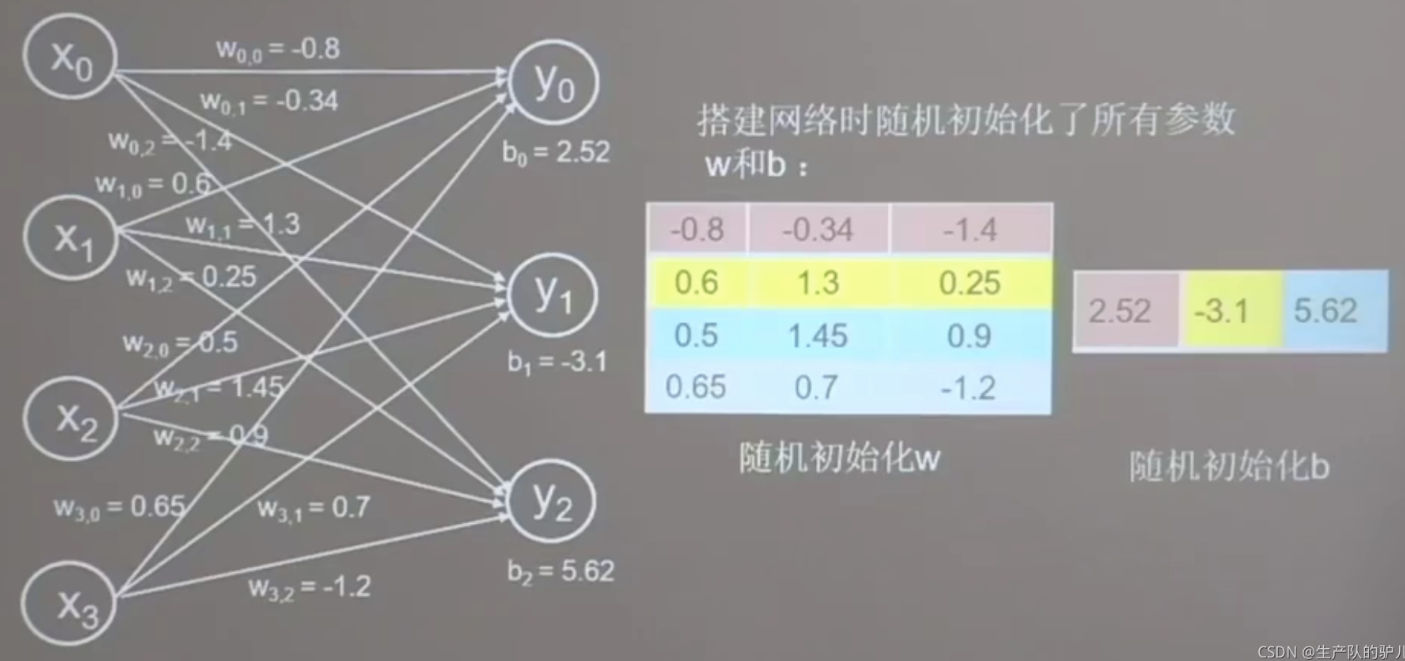
self.layer1 = nn.Linear(4, 10)
self.layer2 = nn.Linear(10, 10)
self.output = nn.Linear(10, 3)
self.relu = nn.ReLU()
def forward(self, x):
x = self.relu(self.layer1(x))
x = self.relu(self.layer2(x))
x = self.output(x)
return x
model = IrisClassifier()
criterion = nn.CrossEntropyLoss()
optimizer = optim.Adam(model.parameters(), lr=0.01)
epochs = 1000
losses = []
for epoch in range(epochs):
optimizer.zero_grad()
outputs = model(X_train_tensor)
loss = criterion(outputs, y_train_tensor)
loss.backward()
optimizer.step()
losses.append(loss.item())
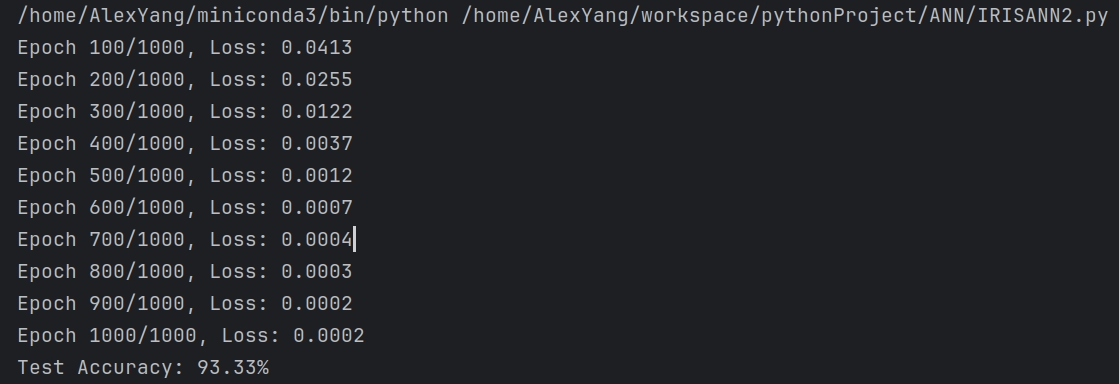
if (epoch + 1) % 100 == 0:
print(f"Epoch {epoch+1}/{epochs}, Loss: {loss.item():.4f}")
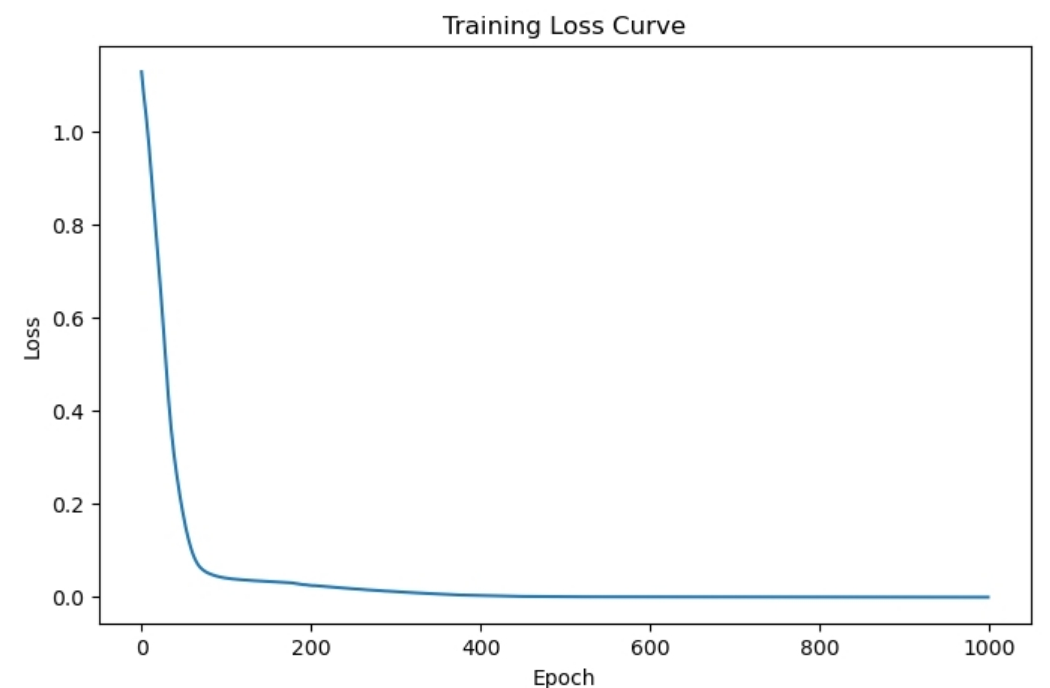
plt.figure(figsize=(8, 5))
plt.plot(losses)
plt.xlabel("Epoch")
plt.ylabel("Loss")
plt.title("Training Loss Curve")
plt.show()
with torch.no_grad():
y_pred = model(X_test_tensor)
predicted_labels = torch.argmax(y_pred, dim=1)
accuracy = accuracy_score(y_test, predicted_labels)
print(f"Test Accuracy: {accuracy:.2%}")
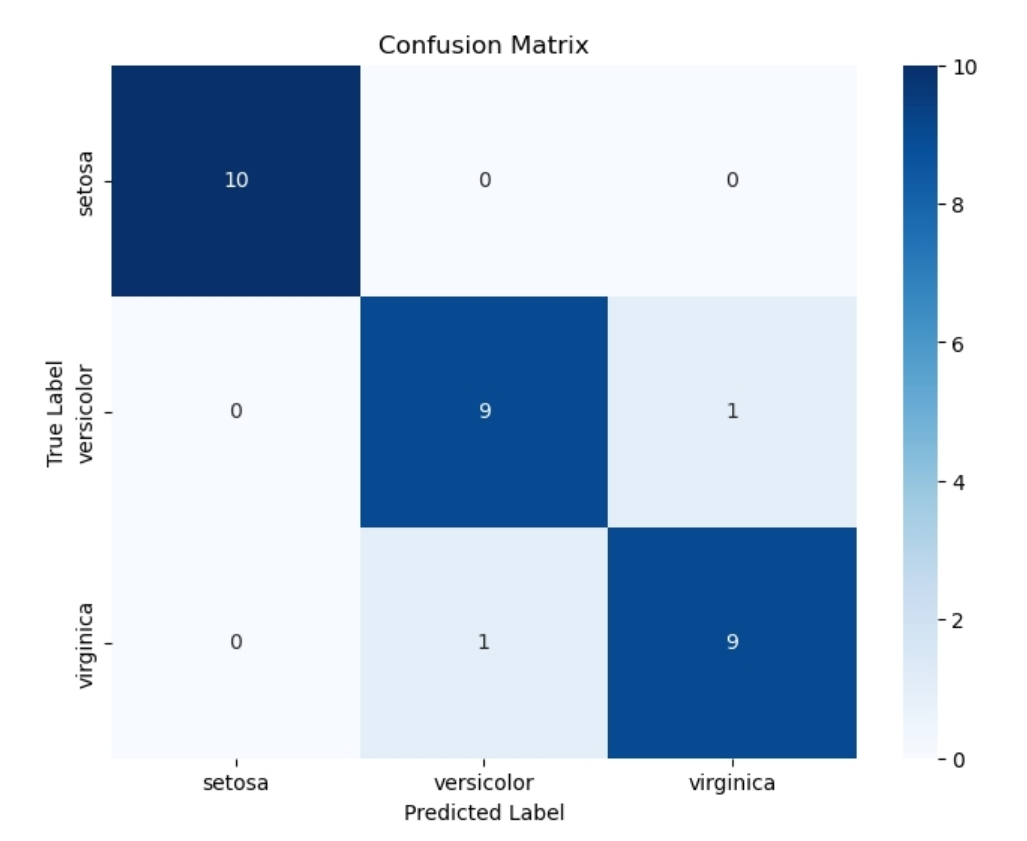
cm = confusion_matrix(y_test, predicted_labels)
plt.figure(figsize=(8, 6))
sns.heatmap(
cm,
annot=True,
fmt="d",
cmap="Blues",
xticklabels=iris.target_names,
yticklabels=iris.target_names,
)
plt.xlabel("Predicted Label")
plt.ylabel("True Label")
plt.title("Confusion Matrix")
plt.show()
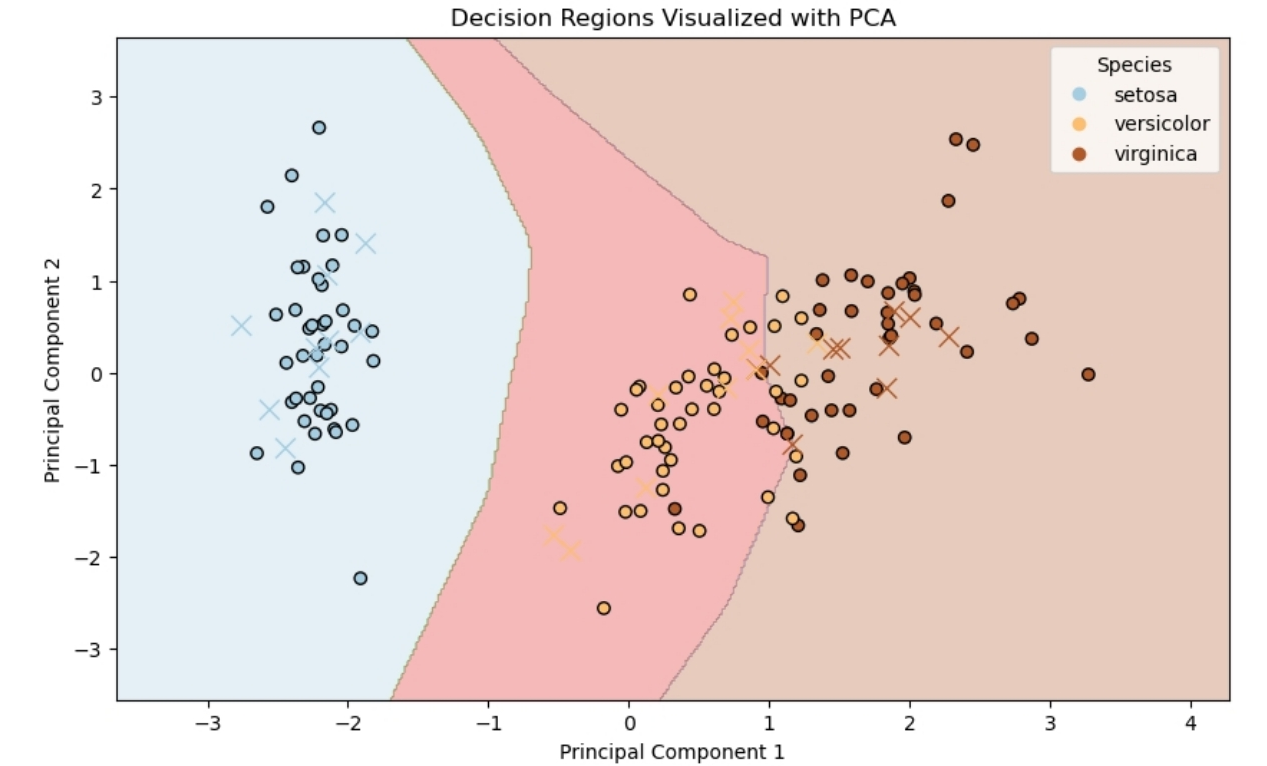
pca = PCA(n_components=2)
X_train_pca = pca.fit_transform(X_train_scaled)
X_test_pca = pca.transform(X_test_scaled)
h = 0.02
x_min, x_max = X_train_pca[:, 0].min() - 1, X_train_pca[:, 0].max() + 1
y_min, y_max = X_train_pca[:, 1].min() - 1, X_train_pca[:, 1].max() + 1
xx, yy = np.meshgrid(np.arange(x_min, x_max, h), np.arange(y_min, y_max, h))
mesh_points = np.c_[xx.ravel(), yy.ravel()]
X_inverse = pca.inverse_transform(mesh_points)
X_inverse_tensor = torch.FloatTensor(X_inverse)
with torch.no_grad():
outputs = model(X_inverse_tensor)
Z = torch.argmax(outputs, dim=1).numpy()
Z = Z.reshape(xx.shape)
plt.figure(figsize=(10, 6))
plt.contourf(xx, yy, Z, alpha=0.3, cmap="Paired")
scatter = plt.scatter(
X_train_pca[:, 0],
X_train_pca[:, 1],
c=y_train,
cmap="Paired",
edgecolors="k",
label="Train",
)
plt.scatter(
X_test_pca[:, 0],
X_test_pca[:, 1],
c=y_test,
cmap="Paired",
marker="x",
s=100,
linewidth=1,
label="Test",
)
plt.xlabel("Principal Component 1")
plt.ylabel("Principal Component 2")
plt.legend(
handles=scatter.legend_elements()[0],
labels=iris.target_names.tolist(),
title="Species",
)
plt.title("Decision Regions Visualized with PCA")
plt.show()
|